Home batteries
Store your own solar power and use it in the evening instead of exporting it. Including the application for any incentive you're entitled to.
Without a battery, the power you generate beyond your needs during the day goes to the grid, and you buy it back at a higher price in the evening. A home battery stores that surplus so you use it yourself.
The inverter and battery must be matched. If you have panels and battery installed together, you save a second inspection and a second registration with Fluvius.
We work out in advance what a realistic payback period is in your situation, and help with the incentive application.
What we take care of
- Calculating the capacity that fits your consumption
- Installation in a garage, basement, storage room or utility room
- Connection to an existing or new hybrid inverter
- Backup power for part of the house, if desired
- An EMS (energy management system) that coordinates panels, battery, charger and heat pump
- Smart control based on the hourly prices of a dynamic contract
- Monitoring by day, week and month
- Registration and inspection
When a battery pays off, and when it doesn't
A home battery pays for itself on the difference between what you pay to import power and what you receive when you export it. The bigger that difference, the faster it goes.
It pays off most for a household that's out during the day: the panels produce while nobody is using power, and without a battery that surplus goes to the grid. If you already use most of it right away, the gain is smaller.
We calculate this in advance from your own quarter-hourly consumption data, which you can request from your grid operator. If that doesn't give a reasonable payback period, we'll tell you.
How big should it be?
A battery that's too small is full by midday on every sunny day and does nothing for the rest of the afternoon. A battery that's too big never fills up in winter and you pay for capacity that sits idle.
The size follows from your evening consumption: what you need between sunset and the next morning is what the battery has to cover. For most households that's between five and ten kilowatt-hours.
The units we install are modular. If you start with one module and later find it isn't enough, another module can be added without replacing the rest.
The EMS: the brain of the installation
A battery on its own does little more than store whatever happens to be left over. What really gets the most out of it is the EMS — the energy management system that sits above your installation and decides what happens at every moment.
It reads your consumption, the battery's state of charge, the roof's output and, with a dynamic contract, tomorrow's hourly prices. Based on that, it decides whether to charge, discharge or export, and whether the car and heat pump should run now or later.
We install equipment that talks to each other within one system. That's deliberate: a battery from one brand on an inverter from another will often connect, but then nothing controls the whole and the smart part is exactly what gets lost.
Backup power during an outage
A standard battery shuts down during a power cut: that's a safety requirement, so there's no voltage on the grid while someone is working on it.
If you want to keep going during an outage, we install a separate backup circuit. On it you put the things that really must keep working: the fridge, the boiler, some lighting and the internet. Putting the whole house on backup is possible, but makes the installation considerably more expensive.
One, two or three modules
A home battery isn't a cabinet of one fixed size. It's built from modules stacked on top of each other, each good for roughly five to seven kilowatt-hours. So you don't choose between small and large, but how many modules go on the base.
That's exactly why we work with this system. If after a year you find you're consistently short, or an electric car or heat pump is added, you put another module on top. The inverter, cabling and base stay where they are; only the module is added.
All three set-ups below have the same footprint. What changes is the height, not the floor space you need to free up.
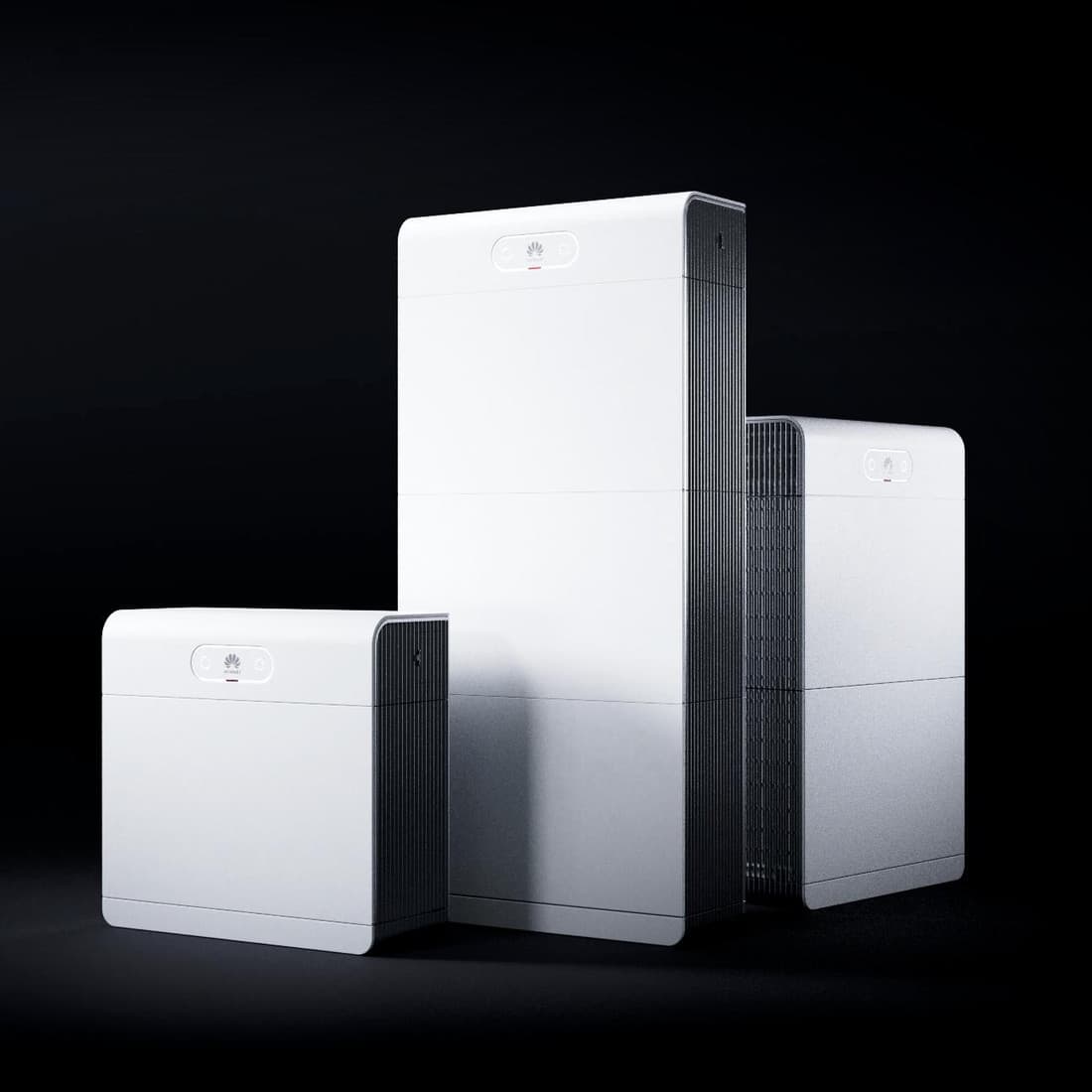
One module
Enough to cover an average evening and night for a household with normal consumption and no electric car. This is where most installations start.
Two modules
The step for those who cook electrically, have a heat pump water heater or occasionally charge a car. Also the size at which a dynamic contract really starts to pay off, because you can store enough to skip the expensive evening hours entirely.
Three modules
For a large roof, a heat pump that runs all season, or a car that charges every day. This calls for a generous installation: a battery that never fills up in winter is capacity sitting idle.
The usable capacity per module varies slightly by device and generation. Your quote states the exact number of kilowatt-hours of the model we propose, not an indicative figure.
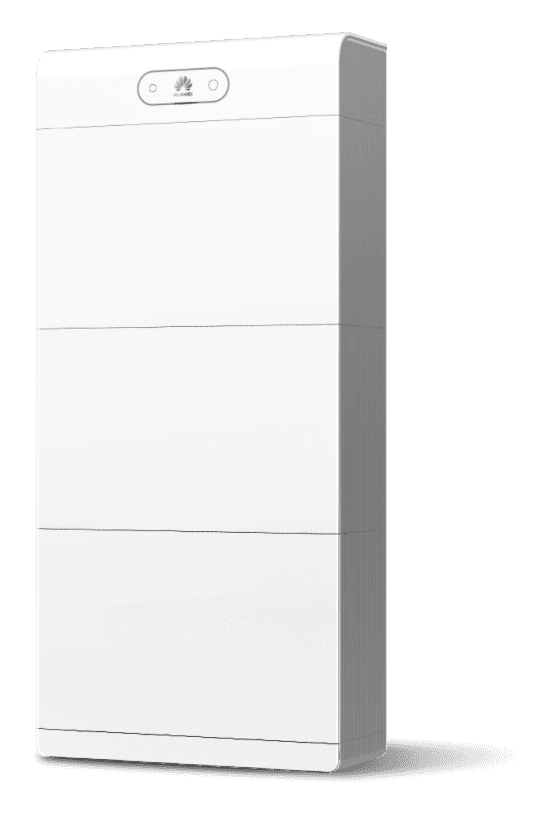
Modular, so you can add to it later
Most home batteries are built from separate modules stacked on top of each other. So you start with the capacity that fits your consumption, and add a module later when a car or heat pump comes along, without redesigning the installation.
We are not tied to one brand. What we propose depends on your installation, your consumption and your budget. What you see above is always one of the options.
What the installation is made of
Home battery
Stores the surplus from the day so you use it yourself in the evening instead of exporting it. Short on space in the garage or storage room? A smaller stack is often enough for a family home.
Which battery suits your consumption?
Enter roughly what you use. You'll immediately see the direction: one, two or three modules. No email address needed.
1 moduleabout 6 kWh
- You use an average of 9.6 kWh per day.
- Of that, roughly 4.3 kWh falls after sunset.
- On a good day, your roof has about 14.7 kWh left over after your direct use.
This is a direction, not a quote. The right size follows from your quarter-hourly consumption, which you can request from your grid operator. Send us that file and we'll calculate it exactly.
Get an exact calculationWork out which battery suits you
Four short questions. You don't need to know anything about kilowatt-hours or inverters.
Step 1 of 6
Installation and handover
A battery needs to stand somewhere dry and frost-free, with enough space around it to shed heat. A garage, basement or storage room almost always works; during the site visit we check where it fits best and how far it is from the electrical panel.
The installation is inspected and registered, and you receive the report together with the updated diagrams of your electrical panel.
Frequently asked questions: Home batteries
How big should my home battery be?
Look at what you use between sunset and the next morning: that's what the battery needs to cover. For most households that's between five and ten kilowatt-hours, which comes down to one or two modules. If you cook electrically, charge a car or run a heat pump, it quickly becomes more. With the calculator on this page you can see right away which direction you're heading.
Is a home battery worth it without solar panels?
Without panels, the biggest source of savings disappears: storing your own surplus instead of exporting it. What's left is the price difference between cheap night hours and the expensive evening peak on a dynamic contract. That can pay off, but the payback period gets much longer. We only recommend it when the numbers genuinely support it in your case.
Which battery do I need?
We install modular batteries that work with your inverter from the same range. That's deliberate: equipment from one brand controls itself without adapters, and if something goes wrong there's one point of contact. Which model and how many modules follows from your consumption and the space where it will stand.
Can a home battery be added to an existing installation?
Usually, yes. The question is whether your current inverter is hybrid. If it is, the battery connects straight to it. If it's a standard inverter, an extra device is added or we replace it. Send us a photo of your inverter and your electrical panel, and we'll know right away.
Can I combine a dynamic energy contract with a battery?
That's exactly where a battery earns the most. With a dynamic contract, the price varies by the hour. The controls charge when power is cheap and supply when it's expensive, taking into account what your roof will produce that day. Without those controls, you leave a large part of the gain on the table.
How much space does a home battery need?
About the footprint of a small chest freezer, and that stays the same whether there's one module on it or three: only the height changes. It needs to be dry and frost-free, with space around it to shed heat. A garage, basement or storage room almost always works.
Want to talk your project through?
Book an appointment at a time that suits you, or simply call. You'll get an honest answer about what's possible, what it costs and how long it takes.