Solar panels
Installation on tiled, slate or flat roofs. We first calculate what your roof can realistically produce and size the system to your consumption.
Before we propose anything, we look at your roof and your annual consumption. Orientation, pitch and shading together determine what an installation really yields.
A system that is too large for your consumption earns much less than expected, because of the capacity tariff and the low export rate. So we size it to what you actually use, not to the maximum that fits on the roof.
We install on tiled, slate and flat roofs. We handle the registration with Fluvius.
What we take care of
- Roof survey and a yield calculation based on your own consumption
- Installation on tiled, slate and flat roofs
- Single-phase or three-phase inverter, matched to your connection
- Panel optimizers where shading reduces output
- Connection to the electrical panel with the necessary protection
- Registration of the installation with Fluvius
- Inspection of the installation
- Monitoring, so you can see what your roof produces each day
Calculate first, then lay panels
What a roof yields depends on four things: orientation, pitch, shading and the condition of the roof covering. A south-facing roof produces the most, but east-west gives a flatter curve across the day, which often matches better with when you use power at home.
We start from your annual consumption in kilowatt-hours, not from the number of panels that physically fit. A system far larger than your consumption mainly produces exports, and since net metering was abolished, exports pay very little.
If your roof is due for renewal, tell us before we start. Taking panels off and putting them back two years later so a new roof can go underneath is money thrown away.
Glass-glass or glass-backsheet
A glass-backsheet panel has glass on the front and a plastic film on the back. That is the classic construction, lighter and cheaper.
A glass-glass panel has glass on both sides. It is heavier, but less sensitive to moisture and deformation over the long term, and manufacturers usually give a longer warranty on it.
On a normal pitched roof in good condition, glass-backsheet is more than enough. For a flat roof, a carport or a roof you don't want to touch for the next thirty years, glass-glass is the safer choice. We put both options with their prices on the quote.
The inverter and optimizers
The inverter turns the direct current from your panels into usable alternating current. A single-phase unit is enough for a standard household connection; if you have a three-phase connection or a larger output, a three-phase inverter is used.
We install hybrid inverters. They can work with a home battery right away, even if you only add one in a few years. A standard inverter now means buying a second device later.
If a chimney, dormer or tree casts shade for part of the day, we install one optimizer per panel. Without optimizers, one shaded panel drags the whole string down; with optimizers, the other panels keep working at full output.
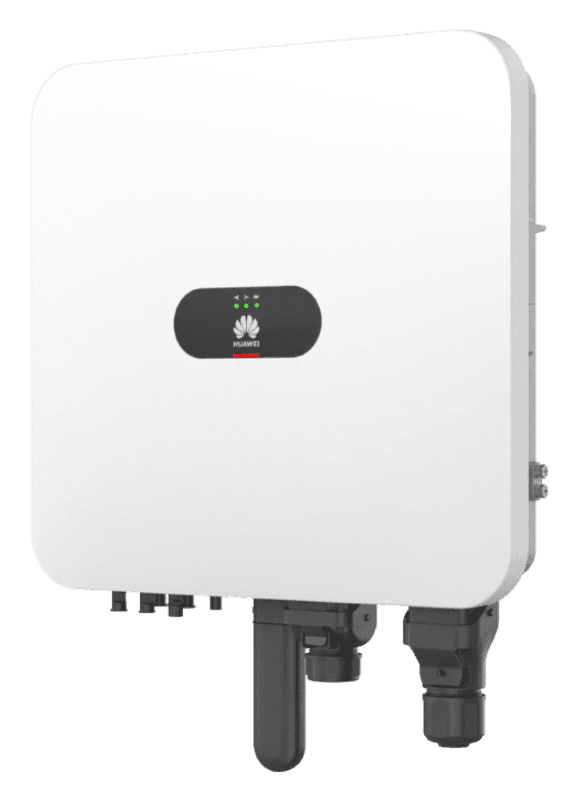
The inverter
The panels produce direct current; the inverter turns it into usable alternating current and controls the rest of the installation. It is the device that determines how much you actually get out of your roof, and the only part you'll still need later if you add a battery or a charger.
We are not tied to one brand. What we propose depends on your installation, your consumption and your budget. What you see above is always one of the options.
What the installation is made of
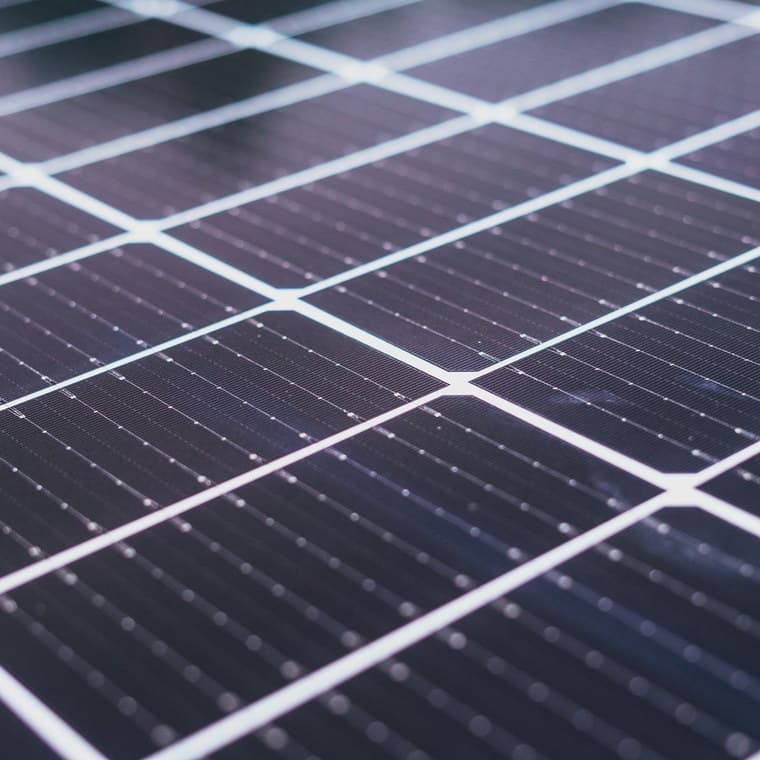
Solar panels
Monocrystalline, around 460 Wp per panel — the format we work with as standard, including panels from the JA Solar range. How many fit on your roof and what they will yield, we calculate in advance.
Single-phase inverter
Turns the direct current from your panels into usable alternating current. Hybrid, so it has a battery input: if you want storage later, you won't need to replace the inverter.
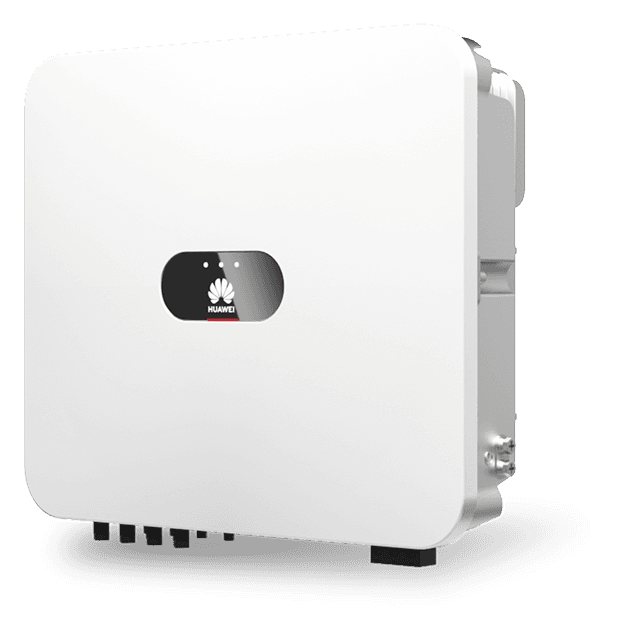
Three-phase inverter
The same device for a home or business with a three-phase connection, or for a larger output on the roof.
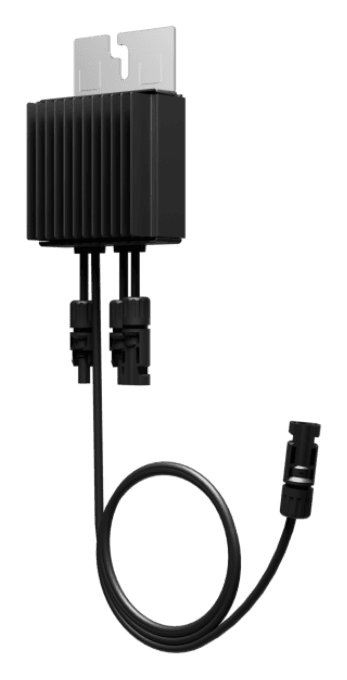
Panel optimizer
One per panel. If one panel is shaded, the others keep working at full output.
Registration, inspection and incentives
A new installation must be inspected and registered with the grid operator. We take care of both, so your digital meter is set up correctly and you're not waiting weeks for paperwork.
Which incentives or tariffs apply changes from year to year. We tell you what applies at the time of the quote and include the amount, rather than working with an average from a brochure.
Frequently asked questions: Solar panels
How many solar panels do I need?
That follows from your annual consumption, not the size of your roof. In Flanders, a well-placed panel produces roughly 350 to 400 kilowatt-hours a year. If you use 3,500 kWh, ten to twelve panels will do. We calculate it from your own consumption and take into account what's still to come, such as an electric car or a heat pump.
Are solar panels still worth it in 2026?
Yes, but the calculation is different from ten years ago. With the end of net metering (the meter that ran backwards), the idea that the grid is your free battery disappeared. What you save today is mainly the electricity you use yourself at the moment the panels produce it. A system sized to your consumption still pays for itself; one that is far too large does so much more slowly.
What's better: more solar panels or a home battery?
Panels first, then a battery. As long as you don't generate enough, storage makes little sense: there is nothing to store. Once you consistently produce more than you use during the day, the gain shifts to the battery. If you already export a sizeable surplus to the grid, a battery usually earns more than adding more panels.
What if my roof is partly in the shade?
Then we install optimizers. Without them, one shaded panel drags the whole string down, including the panels in full sun. With one optimizer per panel, the rest keep working at full output. With heavy, permanent shade we check whether that roof face is worth it at all; sometimes fewer panels on the right side is the better proposal.
What does a solar panel installation cost?
That depends on the number of panels, the type of roof and whether an inverter is needed. We work with one fixed price on the quote, including materials, labor, inspection and registration with Fluvius. Extra work only goes ahead with your written approval.
Want to talk your project through?
Book an appointment at a time that suits you, or simply call. You'll get an honest answer about what's possible, what it costs and how long it takes.