Heat pumps & air conditioning
Air-to-water, air-to-air and split air conditioning. We first check whether your home is ready, because insulation and the heat emitters determine efficiency.
A heat pump works best at a low flow temperature. In a well-insulated home with underfloor heating or large radiators, you get excellent efficiency.
If the home is poorly insulated or has small radiators, consumption will disappoint. We tell you that in advance, even if it means a heat pump isn't the right choice for you yet.
A split or multi-split system, what most people call air conditioning, is technically the same machine: an air-to-air heat pump that cools in summer and provides extra heating in spring and fall. For one bedroom or an office it's often the simplest solution, and more economical than electric heaters.
Installing equipment that uses fluorinated refrigerants requires a refrigeration certificate. We work in line with those regulations, and above a certain refrigerant charge, the annual leak check is included on our quote.
What we take care of
- Air-to-water heat pump for heating and domestic hot water
- Air-to-air and split air conditioning for one or more rooms
- Multi-split: several indoor units on one outdoor unit
- Placement of the outdoor unit, with attention to noise and property lines
- Electrical supply and protection from the electrical panel
- Linking to your solar panels and battery where possible
- Maintenance and the statutory leak check
Is your home ready?
A heat pump works best at a low flow temperature. In a well-insulated home with underfloor heating or large radiators, you get excellent efficiency, because the unit only needs to heat the water to around 35 °C (95 °F).
If the radiators are small and designed for 70 °C (158 °F), and insulation is limited, the pump has to work much harder and consumption disappoints. We tell you that in advance, even if it means a heat pump isn't the right step for you yet.
Often the right order is: insulate first and improve the heat emitters, then replace the boiler. That means less work for us and a lower bill for you.
Air-to-water or air-to-air?
An air-to-water heat pump draws heat from the outside air and transfers it to your heating water. It replaces your boiler and can also produce your domestic hot water.
An air-to-air system, what most people call air conditioning, blows the heat straight into the room. Technically it's the same machine: it cools in summer and heats in spring and fall.
For one bedroom, an office or a conservatory, a split unit is often the simplest and most economical solution, and much cheaper than heating with electric radiators. For the whole house, air-to-water is usually the better choice.
Where the outdoor unit goes
The outdoor unit makes noise: a low hum and the sound of the fan. That is rarely disturbing, unless it sits right under a bedroom window or against the neighbors' shared wall.
Together with you, we find a spot where it can blow out freely, not in an enclosed corner where it sucks its own cold air back in, and at a sufficient distance from the property line. A unit on anti-vibration mounts and a solid base makes more difference than most people think.
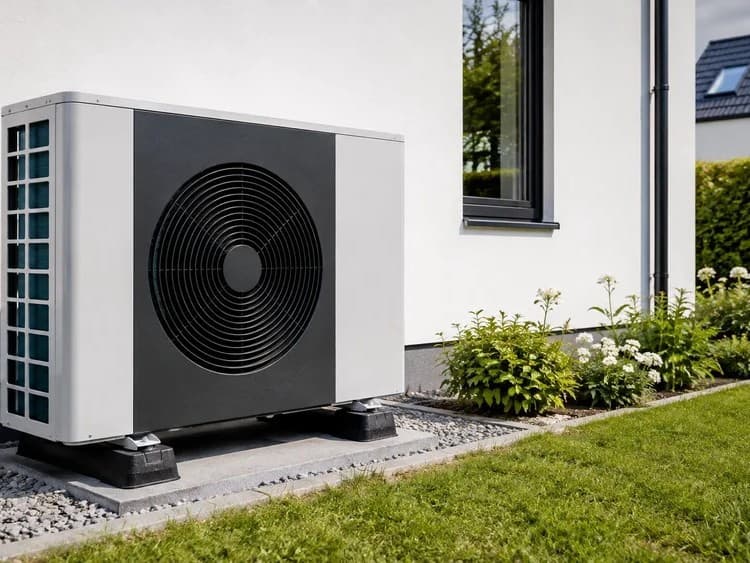
The outdoor unit
The outdoor unit draws heat from the outside air. Where it stands determines how much you and your neighbors hear it, and whether it can blow out freely. We choose that spot together with you, taking the distance to the property line into account.
What the installation is made of
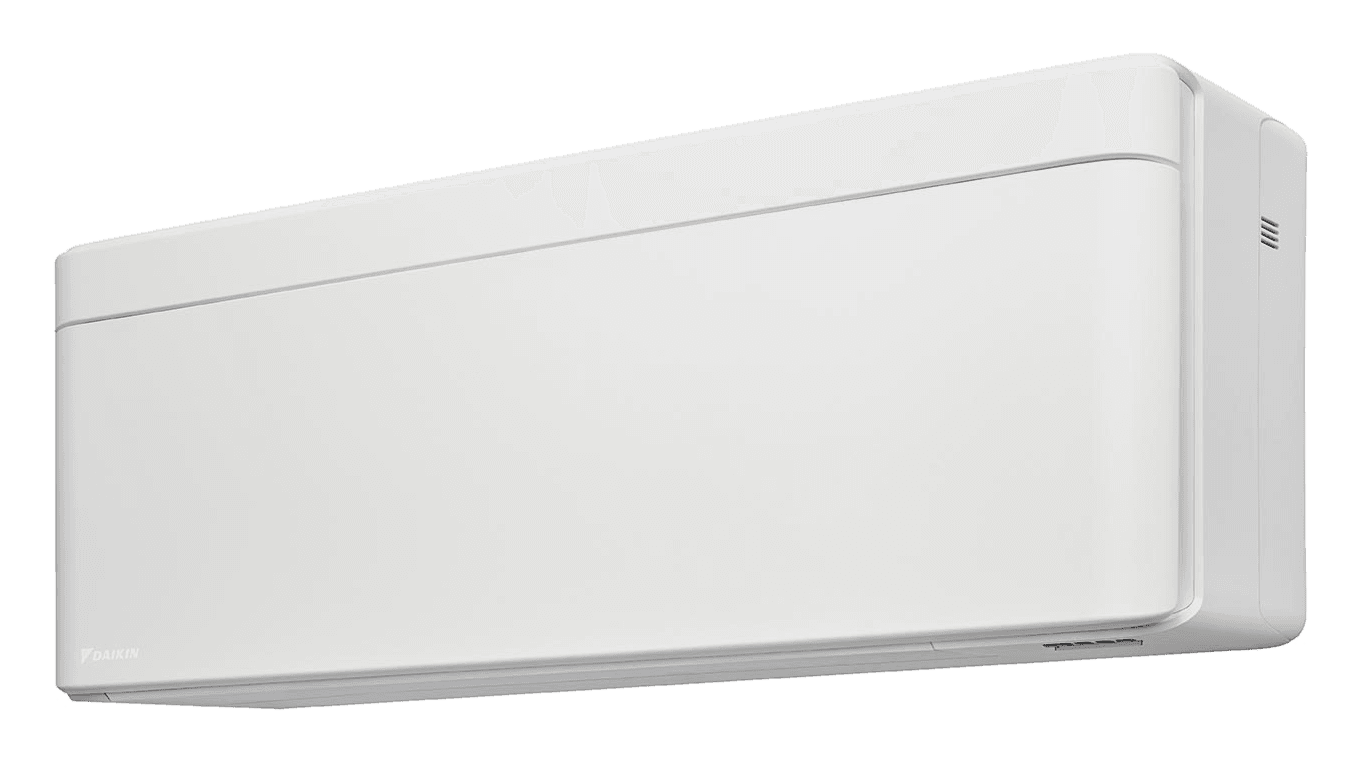
Air conditioning indoor unit
One per room. Cools in summer and heats more efficiently than your boiler in spring and fall.
Refrigerant, maintenance and regulations
Equipment with fluorinated refrigerants may only be installed and serviced by someone with the appropriate refrigeration certification. We work in line with those regulations.
Above a certain refrigerant charge, an annual leak check is mandatory. If that applies to your unit, the check is included on our quote, so there are no surprises afterwards.
Which incentives apply at the time of your quote depends on the equipment and on your home. We include whatever applies at that moment.
Frequently asked questions: Heat pumps & air conditioning
Is my home suitable for a heat pump?
The question isn't how old your home is, but what temperature your heating runs at. Underfloor heating or large radiators at 35 to 45 °C (95 to 113 °F) are ideal. Small radiators that need 70 °C (158 °F), in a moderately insulated house, lead to disappointing consumption. We tell you that in advance, even if it means insulating first is the better order.
What's the difference between a heat pump and air conditioning?
Technically they're the same machine: both move heat rather than generate it. An air-to-water pump transfers that heat to your heating water and replaces your boiler. An air-to-air system, what most people call air conditioning, blows it straight into the room and can also cool in summer.
How much noise does an outdoor unit make?
A low hum and the sound of the fan. That is rarely disturbing, unless the unit sits right under a bedroom window or against the neighbors' shared wall. The location matters more than the device. Together with you, we find a spot where it can blow out freely and stands at a distance from the property line.
Does air conditioning need annual maintenance?
Cleaning the filters and the outdoor unit keeps efficiency up, and you can do most of that yourself. On top of that there is the statutory leak check: above a certain refrigerant charge it is mandatory every year. If that applies to your unit, the check is included on our quote.
Can a heat pump run on my solar panels?
Partly. A heat pump uses the most in winter, just when your roof produces the least. In spring and fall the sun covers a good share. With controls that run the pump when there's a surplus, you get the most out of it.
Want to talk your project through?
Book an appointment at a time that suits you, or simply call. You'll get an honest answer about what's possible, what it costs and how long it takes.